Sujood (prostration) is the closest a believer comes to Allah. It is the most powerful moment in Salah to make heartfelt duas and seek forgiveness.
The Prophet ﷺ encouraged us to increase supplication in sujood, making it a time of deep connection, humility, and peace. In this guide, you will discover 8 powerful and easy duas for sujood, along with their meanings, benefits, and authentic Hadith references.
 Simple & Most Common Dhikr in Sujood
 Simple & Most Common Dhikr in Sujood
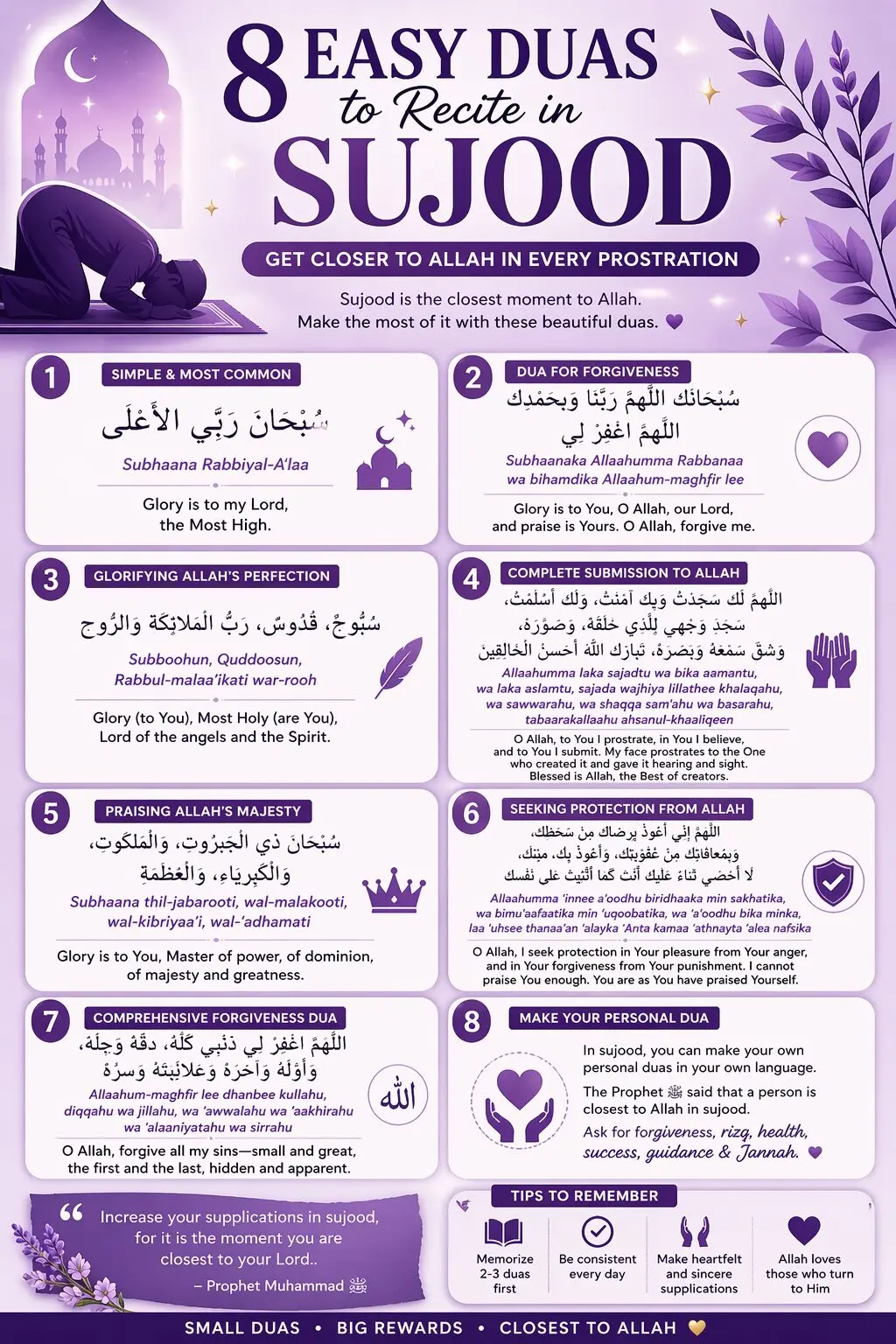
سُبْحَانَ رَبِّيَ الأَعْلَى
Subhaana Rabbiyal-A ‘laa
Glory is to my Lord, the Most High.
At-Tirmidhi 1:83
This is one of the most simple and widely recited duas that many of us memorized during childhood. But as we grow and continue to expand our knowledge, shouldn’t we also deepen our understanding and words of everyday recited duas?
Our beloved Teacher(peace be upon him) taught us these pretty duas— words filled with mercy, love, and guidance. Just imagine… when you recite them, you are repeating the very words that once came from his blessed lips in the dhikr of Allah (SWT).
Isn’t it a comforting and powerful feeling to know that through these duas, you are following his path and strengthening your bond with Allah in the most beautiful way?
1. Powerful Dua for Forgiveness in Sujood
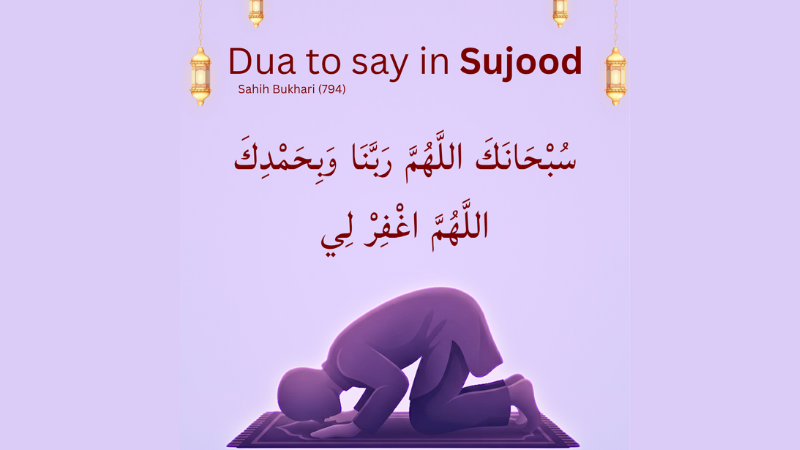
سُبْحَانَكَ اللَّهُمَّ رَبَّنَا وَبِحَمْدِكَ اللَّهُمَّ اغْفِرْ لِي
Subhaanaka Allaahumma Rabbanaa wa bihamdika Allaahum-maghfir lee
Glory is to You , O Allah , our Lord , and praise is Yours . O Allah , forgive me.
Al-Bukhari: 794, 817, 4293 An-Nasa’i: 1048
2. Dhikr to Glorify Allah in Sujood
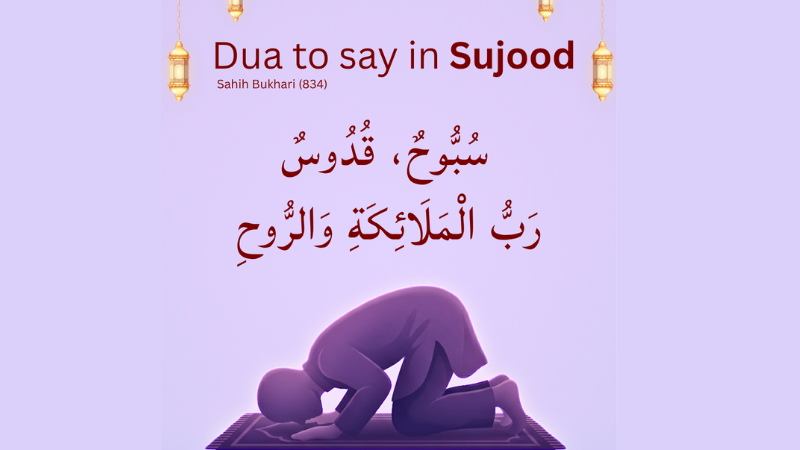
سُبُّوحٌ، قُدُوسٌ، رَبُّ الْمَلَائِكَةِ وَالرُّوحِ
Subboohun, Quddoosun, Rabbul-malaa’ikati warrooh
Glory (to You) , Most Holy (are You) , Lord of the angels and the Spirit.
Abu Dawud: 872, An-Nasa’i: 1049
3.Best Dua for Complete Submission to Allah
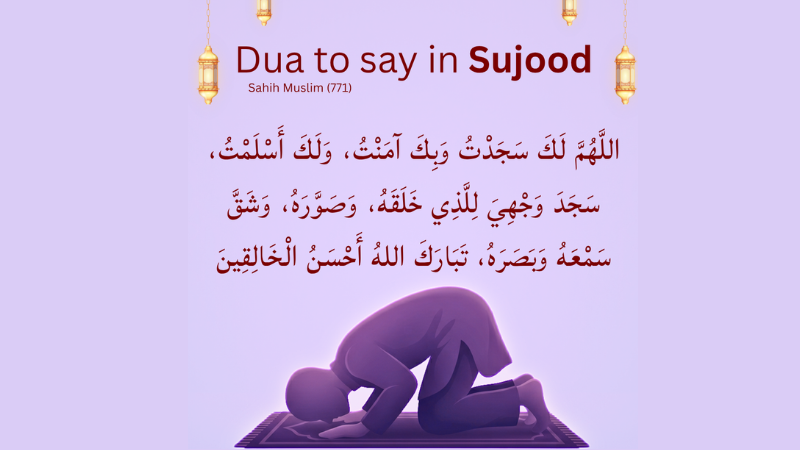
اللَّهُمَّ لَكَ سَجَدْتُ وَبِكَ آمَنْتُ، وَلَكَ أَسْلَمْتُ، سَجَدَ وَجْهِيَ لِلَّذِي خَلَقَهُ، وَصَوَّرَهُ، وَشَقَّ سَمْعَهُ وَبَصَرَهُ، تَبَارَكَ اللهُ أَحْسَنُ الْخَالِقِينَ
Allaahumma laka sajadtu wa bika ‘aamantu, wa laka ‘aslamtu, sajada wajhiya lillathee khalaqahu, wa sawwarahu, wa shaqqa sam’ahu wa basarahu, tabaarakallaahu ‘ahsanul-khaaliqeen
O Allah, to You I prostrate myself and in You I believe. To You I have submitted. My face is prostrated to the One Who created it, fashioned it, and gave it hearing and sight. Blessed is Allah, the Best of creators.
Muslim: 771
4.Tasbeeh of Allah’s Majesty
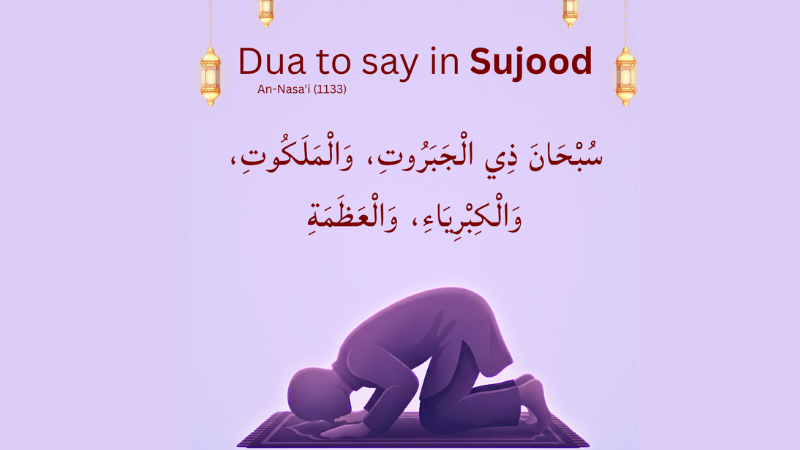
سُبْحَانَ ذِي الْجَبَرُوتِ، وَالْمَلَكُوتِ، وَالْكِبْرِيَاءِ، وَالْعَظَمَةِ
Subhaana thil-jabarooti, walmalakooti, walkibriyaa’i, wal’adhamati
Glory is to You, Master of power, of dominion, of majesty and greatness.
An-Nasa’i: 1133
5. Powerful Dua for Protection
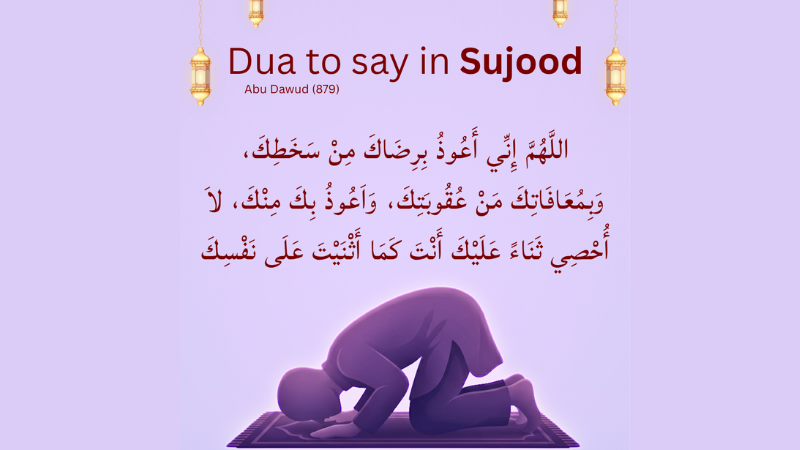
اللَّهُمَّ إِنِّي أَعُوذُ بِرِضَاكَ مِنْ سَخَطِكَ، وَبِمُعَافَاتِكَ مَنْ عُقُوبَتِكَ، وَاَعُوذُ بِكَ مِنْكَ، لَا أُحصِي ثَنَاءً عَلَيْكَ أَنْتَ كَمَا أَثْنَيْتَ عَلَى نَفْسِكَ
Allaahumma ‘innee ‘a’oothu biridhaaka min sakhatika, wa bimu’aafaatika min ‘uqoobatika wa ‘a’oothu bika minka, laa ‘uhsee thanaa’an ‘alayka ‘Anta kamaa ‘athnayta ‘alaa nafsika
O Allah, I seek protection in Your pleasure from Your anger, and I seek protection in Your forgiveness from Your punishment. I seek protection in You from You. I cannot count Your praises. You are as You have praised Yourself.
Abu Dawud: 879, Ibn Majah: 3841
Background and Explanation
‘A’ishah reported; one night I missed the Messenger of Allah (ﷺ) and when I sought him on the spot of prayer I found him in prostration with his feet raised, and he was saying:
”(O Allah), I seek refuge in Your good pleasure from Your anger, and in Your Mercy from Your Punishment, and I seek refuge from You in You; I am not able to praise You (the way that You deserve to be praised), for You are as You have praised Yourself”.
The scholar Al-Khattabi explained a subtle and profound point within this dua. The Prophet ﷺ sought refuge in Allah’s pleasure from His anger, and in His forgiveness from His punishment. These are opposites—pleasure vs anger, forgiveness vs punishment.
However, when mentioning Allah Himself—the One who has no opposite—the Prophet ﷺ sought refuge only in Him. This shows complete dependence on Allah alone.
This dua also reflects seeking forgiveness for shortcomings in worship and inability to praise Allah as He truly deserves.
The phrase “La uhsi thana’an ‘alayk” means:
“I am unable to fully praise You; it is beyond my capacity.”
This highlights human limitation and the عظمت (perfection) of Allah, reminding us that no matter how much we worship, we can never fully do justice to His praise.
6. Comprehensive Dua for Forgiveness of Sins
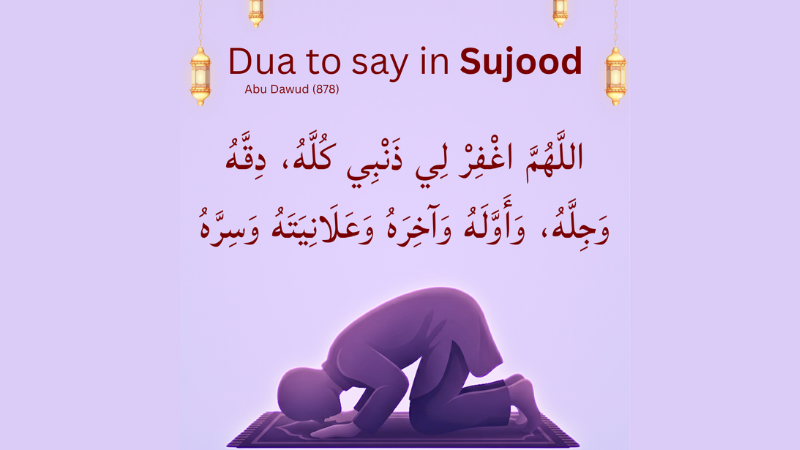
اللَّهُمَّ اغْفِرْ لِي ذَنْبِي كُلَّهُ، دِقَّهُ وَجِلَّهُ، وَأَوَّلَهُ وَآخِرَهُ وَعَلَانِيَتَهُ وَسِرَّهُ
Allaahum-maghfir lee thanbee kullahu, diqqahu wa jillahu, wa ‘awwalahu wa ‘aakhirahu wa ‘alaaniyata hu wa sirrahu
O Allah, forgive me all my sins, great and small, the first and the last, those that are apparent and those that are hidden.
Abu Dawud: 878
7. Dua of Noor
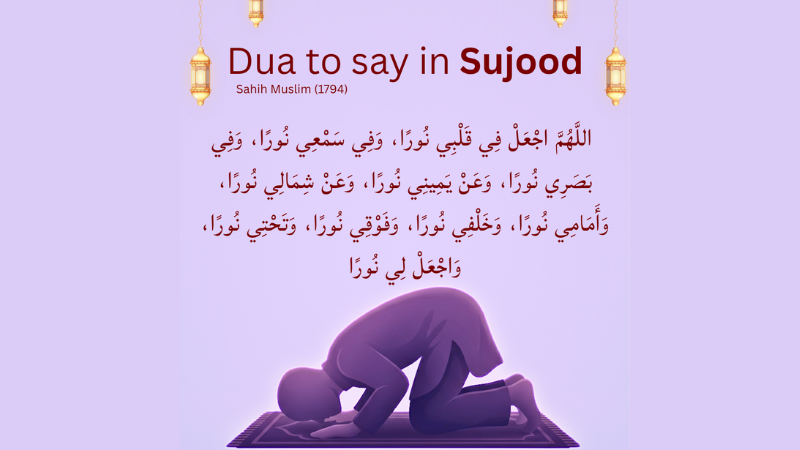
اللَّهُمَّ اجْعَلْ فِي قَلْبِي نُورًا، وَفِي سَمْعِي نُورًا، وَفِي بَصَرِي نُورًا، وَعَنْ يَمِينِي نُورًا، وَعَنْ شِمَالِي نُورًا، وَأَمَامِي نُورًا، وَخَلْفِي نُورًا، وَفَوْقِي نُورًا، وَتَحْتِي نُورًا، وَاجْعَلْ لِي نُورًا، أَوَ قَالَ وَاجْعَلْنِي نُورًا
Allaahummaj-‘al fee qalbee nooran, wa fee sam’ee nooran, wa fee basaree nooran, wa ‘an yameenee nooran, wa ‘an shimaalee nooran, wa amaamee nooran, wa khalfee nooran, wa fawqee nooran, wa tahtee nooran, waj-‘al lee nooran
Allah! place light in my heart, light in my hearing, light in my sight, light on my right, light on my left, light in front of me, light behind me, light above me, light below me, make light for me, or he said: Make me light.
Abu Dawud: 878
Background
Ibn `Abbas reported : I spent the night in the house of my mother’s sister, Maimuna, and observed how the Messenger of Allah ( صلی اللہ علیہ وسلم ) prayed (at night). He got up and relieved himself. He then washed his face and hands and then went to sleep. He again got up and went near the water-skin and loosened its straps and then poured some water in a bowl and inclined it with his hands (towards himself). He then performed a good ablution between the two extremes and then stood up to pray. I also came and stood by his left side. He took hold of me and made me stand on his right side. It was in thirteen rak`ahs that the (night) prayer of the Messenger of Allah ( صلی اللہ علیہ وسلم ) was completed. He then slept till he began to snore, and we knew that he had gone to sleep by his snoring. He then went out (for the dawn prayer), and said while praying or prostrating himself: O Allah! place light in my heart, light in my hearing, light in my sight, light on my right, light on my left, light in front of me, light behind me, light above me, light below me, make light for me, or he said: Make me light.
Sahih Muslim Hadees Number: 1794 / Arabic Hadees Number: 763
8.Dua in prostrating before Allah
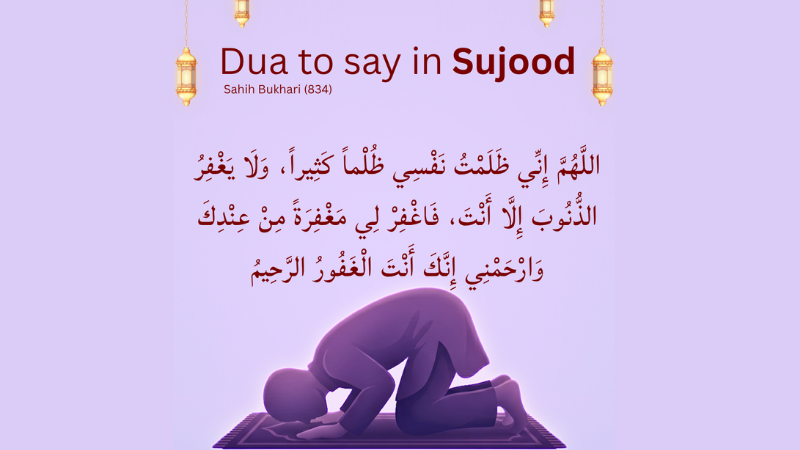
اللَّهُمَّ إِنِّي ظَلَمْتُ نَفْسِي ظُلْمًا كَثِيرًا، وَلاَ يَغْفِرُ الذُّنُوبَ إِلاَّ أَنْتَ، فَاغْفِرْ لِي مَغْفِرَةً مِنْ عِنْدِكَ، وَارْحَمْنِي، إِنَّكَ أَنْتَ الْغَفُورُ الرَّحِيمُ
Allahumma inni zalamtu nafsi zulman kathiran, wa la yaghfirudh-dhunuba illa anta, faghfir li maghfiratan min ‘indika, warhamni, innaka antal-Ghafur-ur-Rahim
O Allah, I have massively wronged myself, and no one forgives sins but You. So, grant me forgiveness from Yourself and have mercy on me. Surely, You are the Forgiving, the most Merciful.
Abu Dawud: 878
Background and Explanation
Abu Bakr As-Siddiq (May Allah be pleased with him) reported:
I requested the Messenger of Allah (ﷺ) to teach me a supplication which I could recite in my Salat (prayer). Thereupon he said, “Recite: Allahumma inni zalamtu nafsi zulman kathiran, wa la yaghfirudh- dhunuba illa Anta, faghfir li maghfiratan min ‘indika, warhamni, innaka Antal-Ghafur-ur-Rahim
Riyad As Salihin Arabic/English Book 17, Hadith 1475.
[Al-Bukhari and Muslim]
The classical Islamic scholar Imam An-Nawawi derived a powerful spiritual and psychological lesson from this narration. He explained that if Abu Bakr (RA)—the most righteous companion after the Prophets—was taught to seek forgiveness for “massive wrongdoing,” what does this mean for us?
Think of this dua as your daily spiritual reset. Throughout the day, we unintentionally collect spiritual burdens—whether through gossip, distractions, scrolling through harmful content, or simply losing focus on our purpose. Reciting this dua after every salah acts like a purification process, cleansing the heart and renewing your connection with Allah before stepping back into daily life.
Recite it Before saying Salam or in prostration, Both are liked ways by scholars.
Why Making Dua in Sujood is So Powerful
Add this section (IMPORTANT for ranking):
The Prophet ﷺ said that a servant is closest to Allah during sujood, so increase your supplications.
This makes sujood the best time to ask for:
- Forgiveness
- Rizq (provision)
- Health
- Success
- Jannah
Best Time to Recite These Duas
 Best Time to Recite These Duas
You can recite these duas:
- During sujood in salah
- Before saying salam
- In voluntary prayers


0 Comments