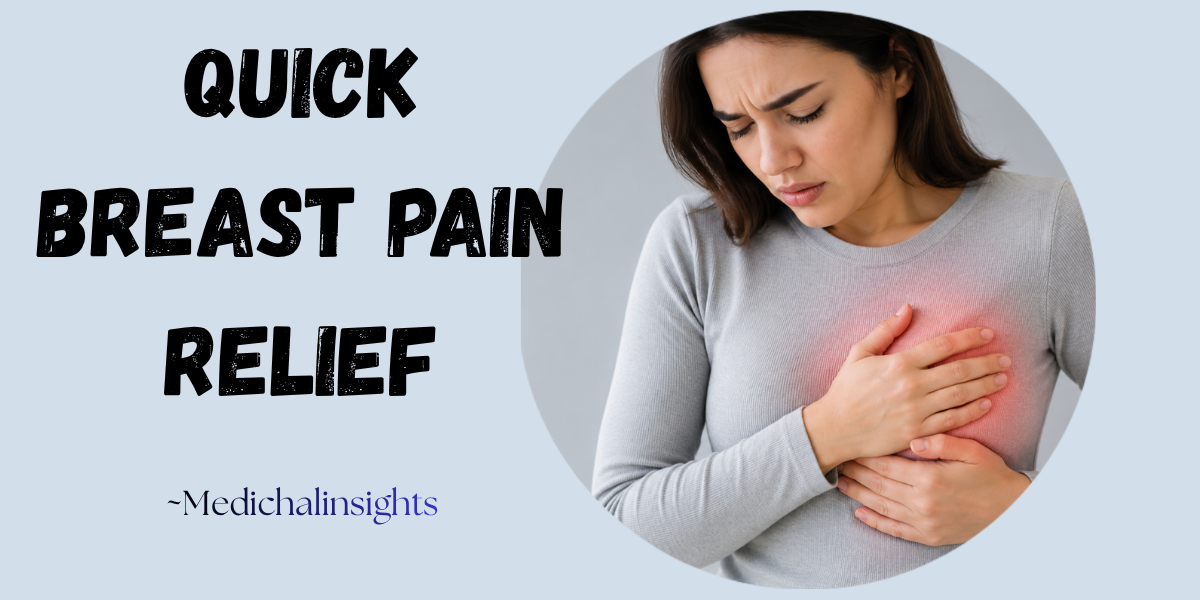
Breast pain is one of the most common reasons women come to see me — and one of the most misunderstood. Over the years, I’ve seen patients in near-panic because the discomfort felt sudden and unexplained. Most of the time, what they needed was not an urgent procedure — they needed someone to sit with them, explain what was happening inside their body, and give them practical tools to feel better. That’s exactly what this post is for.
Whether you are experiencing a dull ache before your period, a sharp pain under your left or right breast after a long day, or a general tenderness that has been lingering for weeks — most breast pain is not a sign of breast cancer. But it does deserve your attention, a little understanding, and the right kind of care.
⚠️ When to See a Doctor Immediately
In my clinic, the first thing I do is rule out anything serious. These are the signs that should prompt you to seek medical care right away — do not wait, do not self-manage:
- Breast pain accompanied by a high temperature, chills, or feeling hot and shivery — this may indicate an infection
- Any part of the breast is red, hot, or swollen
- A hard lump anywhere in you breast
- Nipple discharge, especially if it is streaked with blood
- A noticeable change in the shape of one or both breasts
- Skin that looks dimpled or puckered (like the peel of an orange)
- A rash around the nipple, or a nipple that has turned inward
If none of these apply to you — good. Now let’s talk about what you can do to feel better.
Understanding Your Breast Pain: Cyclical vs. Non-Cyclical
One of the first questions I ask every patient is: “Does your pain follow a pattern with your cycle?” The answer almost always unlocks everything.
Keep a Breast Pain Diary
I ask nearly every patient with recurring breast pain to keep a simple diary — just a few words each day noting pain level, location, and where they are in their cycle. It takes two minutes and delivers enormous insight. Within six to eight weeks, patterns become visible that neither the patient nor I could see before. It is also incredibly empowering — understanding your own body changes how you experience the pain.
A 41-year-old patient came to me after three visits to the emergency department for “chest pain.” Each time, cardiac causes were ruled out. When she finally reached my clinic and we started a pain diary, it became clear: her pain always appeared two to three days after a particularly stressful week at work, not linked to her cycle at all. We addressed her stress management and she has not had an episode in over six months.
— A Clinic case.Cyclical Breast Pain
This is the most common type. It is directly linked to hormonal fluctuations during the menstrual cycle — estrogen and progesterone levels rise and fall, and breast tissue responds to those changes. The pain typically peaks in the days before a period and eases once it begins. It often affects both breasts and may feel heavy, tender, or achy. Women on hormone replacement therapy (HRT) can experience this type of pain as well.
Non-Cyclical Breast Pain
This type has no predictable pattern. It may be constant or intermittent, affect one breast more than the other, and is more common in women who are post-menopausal. Sometimes the source is not even the breast itself — muscle strain around the chest wall, costochondritis (inflammation at the rib joints), or posture-related tension can all refer pain to the breast area. I have seen many patients come in for “left breast pain” that turned out to be a tight pectoral muscle from carrying a heavy bag on one side.
Quick Relieving Tips — What Actually Works
The good news: for the vast majority of women, breast pain settles on its own within 3 to 6 months. That said, there is plenty you can do right now to make the journey more comfortable. Here is what I recommend to my patients — ranked by how consistently I see results in the clinic.
🩱 Wear the Right Bra
This is the single most underrated intervention I give my patients, and it is often the first thing that brings relief. A poorly fitting bra stretches and pulls at breast tissue with every movement and postural shift — and that repeated mechanical tension is a primary driver of pain. My recommendation: a well-fitted bra during the day for proper support, and a soft sports bra at night to keep things comfortable while you sleep. Many of my patients notice a difference within a week of making this switch alone.
💊 Ibuprofen or Paracetamol
Anti-inflammatory pain relief — especially ibuprofen gel applied directly to the sore area — has solid research behind it for breast pain. I often recommend starting with topical ibuprofen gel before reaching for tablets, since it delivers the anti-inflammatory effect right where it’s needed with fewer systemic side effects. If you have a sensitive stomach or a history of ulcers, paracetamol is the safer choice. Always take oral NSAIDs in the morning with food, and don’t use them long-term without medical advice.
🌿 Evening Primrose Oil (3g Daily)
This one surprises many of my patients — but it has genuine supporting evidence, particularly for cyclical breast pain. A daily dose of 3g, taken consistently for at least six weeks, can make a meaningful difference. Please do not take Evening Primrose Oil if you are pregnant or actively trying to conceive, as it can stimulate uterine contractions.
☀️ Vitamin E Supplements
Taken consistently over a few months, Vitamin E supplementation has shown measurable benefit in reducing breast pain symptoms. You can also apply Vitamin E oil topically to the sore area for localised relief. It is safe, widely available, and genuinely worth adding to your routine — ideally as part of a combined approach rather than a standalone treatment.
🧘♀️ Actively Manage Your Stress
Stress does not just affect your mood — it disrupts your hormonal balance in real, measurable ways. Elevated cortisol from chronic stress can indirectly raise estrogen levels, and estrogen is a well-known driver of breast pain. I have seen patients reduce their pain intensity dramatically just by taking stress management seriously Even ten minutes of slow, intentional breathing each day is a genuine clinical intervention.
🏃♀️ Exercise Regularly
Physical activity helps regulate estrogen levels, supports a healthy weight, and reduces overall inflammation — all relevant to breast pain. Always wear a properly fitting sports bra during exercise; this is non-negotiable if you are experiencing pain. Beyond breast pain specifically, regular movement reduces the long-term risk of breast cancer and has a significant positive effect on stress, sleep, and hormonal health. It is one of the best investments you can make in your body.
☕ Reduce Caffeine & Eat Nutritiously
The research on caffeine and breast pain is mixed, but I have had enough patients report noticeable improvement after cutting back on coffee that I always mention it. More broadly, switching from processed fast food to nutrient-dense, whole-food meals supports immune function, replenishes micronutrients, and helps keep hormones balanced. It is not a dramatic single intervention — but as part of a wider lifestyle approach, the cumulative effect is real.
🌙 Prioritise Your Sleep
Poor sleep is directly and measurably associated with heightened pain sensitivity — and breast pain is no exception. Non-cyclical breast pain in particular has a strong link to disrupted sleep. If you are not sleeping well, addressing that one thing may do more for your pain than any supplement or remedy on this list.
Review Your Contraception or HRT
If you are on the oral contraceptive pill or hormone replacement therapy and your breast pain started or worsened around the same time you began, it is worth having that conversation with your doctor. Switching to a lower-dose formulation or a different type can sometimes resolve the pain completely. Please do not stop or change any medication without speaking to your physician first.
When Self-Management Is Not Enough
For a small group of women, breast pain is severe enough to interfere significantly with daily life — sleep, work, exercise, and emotional wellbeing. In these cases, referral to a specialist breast clinic is the appropriate next step. There, hormonal medications such as Danazol or Tamoxifen may be considered. These carry side effects and are not taken lightly, but a short, monitored course can bring relief where nothing else has worked.
It’s Okay to Feel Anxious About It
I want to say this plainly, because I see it every week: breast pain is emotionally exhausting. Even after I reassure a patient that her pain is benign, the anxiety does not simply switch off. Worry about breast cancer, frustration at the persistence of pain, a sense of helplessness — these are all completely normal responses. You are not overreacting.
What I want you to know is this: breast pain alone does not increase your risk of breast cancer. But staying breast-aware does matter. Know your own body. If something changes — a new lump, skin changes, nipple discharge — do not wait. Get it checked.
Most breast pain gets better. It may take a few months, it may come back at times, but with the right approach it is manageable. You do not have to navigate it alone. If your pain is persistent, changing, or simply worrying you — please reach out to a healthcare provider. That is exactly what we are here for.


0 Comments