Faith & Mental Health
Seven spiritual and practical teachings from the Quran and Sunnah that bring genuine stillness to an anxious heart — without ignoring the reality of your struggle.
Seven spiritual and practical teachings from the Quran and Sunnah that bring genuine stillness to an anxious heart — without ignoring the reality of your struggle.
Anxiety is one of the most quietly devastating feelings a person can carry. It whispers that the worst is coming, that you are not enough, that things are slipping out of control. And in a world that never slows down — especially if you are a doctor, a caregiver, a parent, or simply a human being trying to keep up — anxiety finds plenty of material to work with. Islam does not pretend this away. Instead, it offers something far more honest: a framework of faith, practice, and presence that can genuinely calm the storm inside. Here are seven ways that framework works.
“And whoever relies upon Allah — then He is sufficient for him. Indeed, Allah will accomplish His purpose.” — Quran 65:3
Tawakkul is often mistranslated as passivity — “just leave it to Allah” said in a way that means “don’t try.” That is not what it means. Tawakkul is the profound act of doing everything within your power and then releasing the outcome to the One who actually controls outcomes. It is the combination of action and surrender, of effort and trust.
Think of it this way: when you board a flight, you do not stand at the cockpit door daking pilot wether he is pressing the required button or not. You have done what you can — you booked the flight, you arrived on time, you fastened your seatbelt. And then you trust the pilot. Allah is the Pilot of your life. The hearts of every person around you — your boss, your patients, your critics, your loved ones — are in His hand. Their opinions, their decisions, their responses: all of it is ultimately under His authority, not yours.
This realization is extraordinarily liberating for the anxious mind. So much of anxiety is the exhausting attempt to control what we were never meant to control. Tawakkul is permission to put that weight down. Make your du’a regularly, ask Allah for strength and guidance, and when a decision feels impossible, pray Salat al-Istikhara — the prayer of seeking divine counsel — and then move forward with trust rather than paralysis.
Tawakkul is not the absence of effort. It is the freedom that comes when you stop trying to be the pilot of a plane Allah is already flying.
The Western wellness world has discovered mindfulness in recent decades and markets it as a revolutionary solution to anxiety. Meditation apps, breathwork courses, guided body scans — all carrying the same core message: be present, not lost in thought. Muslims have been obligated to practice exactly this five times a day, every day, from the moment they reach maturity until the moment they die.
Salah is structured mindfulness. The specific positions — standing, bowing, prostrating — anchor you in your body. The repetition across five daily prayers creates a rhythm that interrupts the spiraling thought patterns anxiety feeds on. You cannot truly be in sajdah — forehead on the ground, face before your Creator — and simultaneously be lost in catastrophic thinking about tomorrow. Keeping Allah as your central focus helps in mindfullness in general.
And there is something even deeper at work: prayer is a direct conversation with Allah. When you stand in Salah with presence, you are reminded that you are not alone in anything you are facing. The feeling of isolation that anxiety so often produces — the sense that you are the only one carrying this weight — dissolves in that connection. As you deepen your presence in Salah, that mindfulness naturally begins to spill into the rest of your life.
Read also How to Achieve True Mindfulness as a Muslim“And We send down of the Quran that which is healing and mercy for the believers.” — Quran 17:82
Allah does not call the Quran merely informative or beautiful — He calls it shifa: healing. This is not a metaphor. There is something about the frequency, the rhythm, and the meaning of Quranic recitation that has a measurable effect on the nervous system. Researchers in psychoacoustics have noted that the rhythmic, melodic pattern of tajweed produces a physiological calming response. But the believer doesn’t need a study to know this — they feel it.
You do not need to understand every word to begin receiving its benefit. If your Arabic is limited, start with listening. Replace the ambient noise you fill your commute or your evenings with — the podcasts, the music, the endless scrolling — with the sound of Quranic recitation. Let it become the backdrop of your home. You will notice a shift in the atmosphere of your space, and eventually, of your mind.
As your connection grows, begin to read with translation. Sit with a surah and actually reflect on what Allah is saying to you through it. The Quran was not revealed in a vacuum — it was revealed to people who were persecuted, grieving, confused, and afraid. Its words spoke directly to their anxiety, and they speak directly to yours.
Read also How to Replace Music With Quran — And Actually Love It“Verily, in the remembrance of Allah do hearts find rest.” — Quran 13:28
This ayah is perhaps the most direct address to anxiety in the entire Quran. It does not say hearts find rest in success, or in certainty, or in having all your problems solved. It says hearts find rest in the remembrance of Allah. That is the diagnosis and the prescription in a single sentence.
Dhikr — repeating phrases like SubhanAllah, Alhamdulillah, Allahu Akbar, and La ilaha illallah — is a practice that works on multiple levels simultaneously. Cognitively, it interrupts the looping anxious thoughts that replay the same fears over and over. Spiritually, it realigns your attention toward the One who is greater than every problem you face. Physiologically, the slow, rhythmic repetition of these phrases activates the parasympathetic nervous system — the body’s rest-and-digest mode — in much the same way controlled breathing does.
Begin with the morning and evening adhkar — the collections of supplications the Prophet ﷺ taught us to say at the bookends of the day. These are not just recitations; they are a form of spiritual armor. Carry a tasbih (prayer beads) in your pocket. In moments of waiting — between patients, at a traffic light, during a moment of worry — use it. The goal is not performance but presence: genuinely turning your heart toward Allah in that moment, however brief.
One of the most painful dimensions of anxiety is the feeling that your suffering is meaningless — that your hardship is just bad luck, cosmic indifference, or evidence that something is fundamentally wrong with your life. Islamic knowledge dismantles this narrative completely.
When you understand that Allah tests those He loves, that every difficulty carries within it the seed of a gift, that the Prophet ﷺ himself experienced loss and grief and uncertainty — your suffering changes character. It does not become painless, but it becomes purposeful. And purposeful pain is something the human soul can bear. Meaningless pain is what breaks us. Enroll in any Islamic course and connect with those people and learn about Islam in more details. This not onlu helps you get rid of void but also keep you entertain.
Study the seerah — the life of the Prophet ﷺ — and watch how he navigated anxiety, loss, rejection, and fear. Study the lives of the companions who faced exile, poverty, and grief with a peace that confused everyone around them. This is the knowledge that does not just fill your head but genuinely settles your heart. Attend classes, join study circles, listen to scholars you trust, and keep reading.
Read also How to Seek Islamic Knowledge Inside a Busy Medical Life“Perhaps you hate a thing and it is good for you; and perhaps you love a thing and it is bad for you. And Allah knows, while you know not.” — Quran 2:216
This ayah is a gentle but profound confrontation with the limits of human perspective. We are creatures of the present moment — we feel what we feel right now, and we project our current pain into an imagined future that seems equally dark. But Allah sees the entire arc. He sees what this difficulty is producing in you, what door it is closing so another can open, what strength it is building beneath the surface.
Believing in Qadar — the divine decree — is one of the six pillars of iman. It is not fatalism. It is not passivity. It is the recognition that the universe is not chaotic and indifferent but ordered and intentional, guided by a will that is wiser and more merciful than anything our limited minds can grasp. When you genuinely internalize this, anxiety about the future loses a significant portion of its power.
One practical tool: keep a gratitude journal — not as a productivity hack, but as a spiritual practice. Each evening, write three things you experienced that day for which you are grateful to Allah. Over weeks, you will begin to notice a perceptual shift: your default lens starts moving from what is threatening toward what is merciful. This is not toxic positivity — it is trained perception rooted in faith.
The believer who trusts Allah’s decree does not become blind to hardship — they become free from being imprisoned by it.
Islam makes no clean separation between the physical and the spiritual. The body is an amanah — a trust from Allah — and neglecting it is a form of ingratitude. For the anxious person, this is actually good news: improving your physical health is not just self-care, it is worship.
The Prophet ﷺ practiced moderation in eating — he advised filling one third of the stomach with food, one third with water, and leaving one third for air. Centuries before nutrition science existed, this guidance protected against the blood sugar fluctuations and gut-brain disruptions that we now know directly worsen anxiety. He walked regularly, engaged in physical activity, and maintained a balance between rest and exertion.
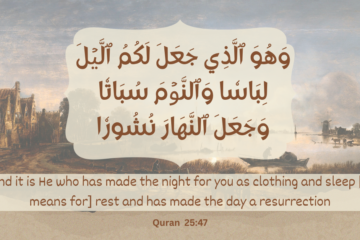
Sleep, in the Quran, is described as a mercy and a rest — subata. Chronically depriving yourself of sleep is not discipline; it is a form of harm to a body that was entrusted to you. Prioritize it. Exercise, even if it is only a daily walk. Eat food that nourishes rather than food that merely fills. And tend to your social health — the Prophet ﷺ warned against isolation and emphasized the importance of community, brotherhood, and sisterhood in the lives of believers.
The practices in this post are not a seven-step cure. They are a way of life — one that, adopted consistently and sincerely, changes the internal landscape of a person over time. Some days you will feel the peace clearly. Other days the anxiety will still be loud. Both are part of the journey.
What Islam offers is not the elimination of difficulty but the company of Allah within it. And for the heart that truly knows who Allah is — His mercy, His knowledge, His love for His believing servants — that company is enough to bear almost anything. Trust the process. Keep returning. And know that every sincere effort you make toward Allah does not go unwitnessed.

Dr. Shah — an MBBS physician, PMDC registered, GMC registered, IMC registered, and ECFMG certified, with clinical experience in Obstetrics & Gynecology, Surgery, Internal Medicine, and Pediatrics at one of Pakistan’s major hospitals.
Discover five Islamic habits — from waking early to protecting your mental health — that help Muslim doctors grow professionally while staying rooted in faith.
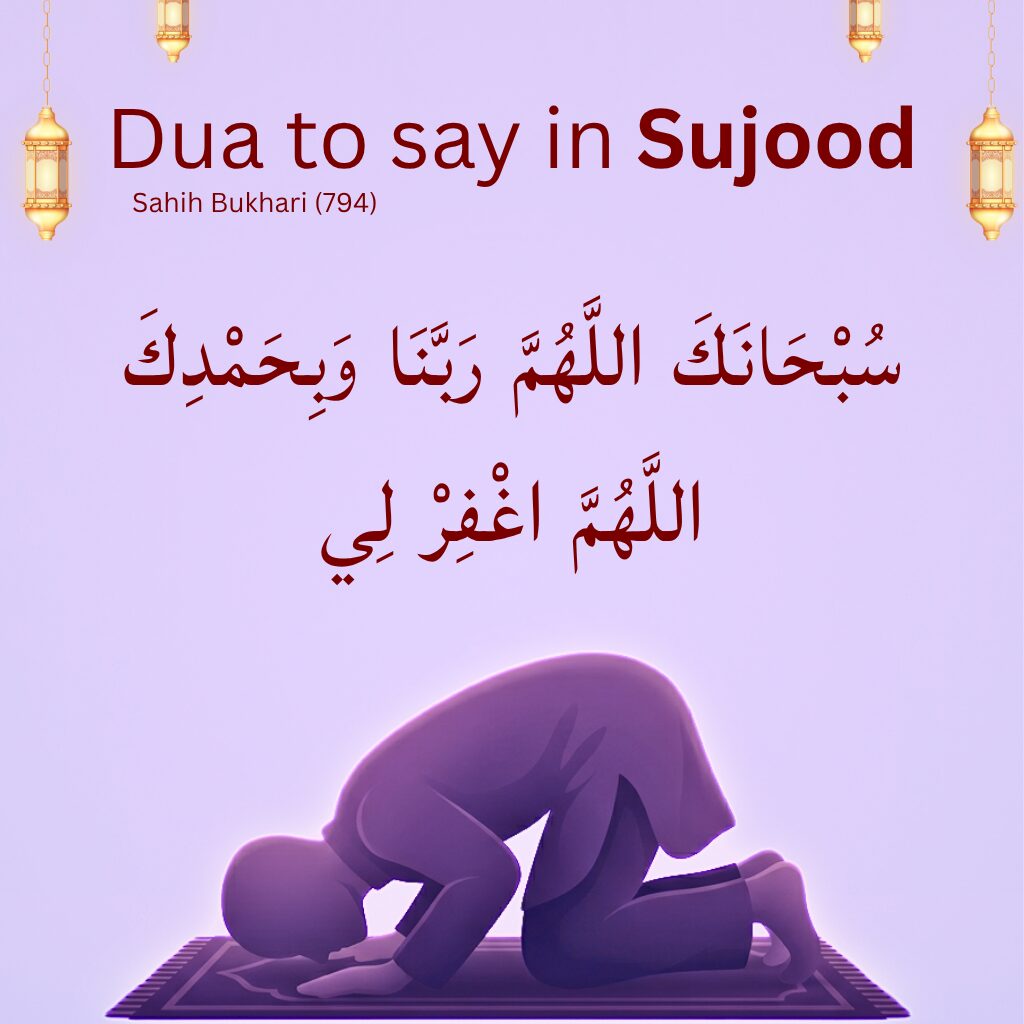
Sujood (prostration) is the closest a believer comes to Allah. It is the most powerful moment in Salah to make heartfelt duas and seek forgiveness. The Prophet ﷺ encouraged us to increase supplication in sujood, Read more

Doctors are notoriously difficult to buy gifts for. They have seen everything, they are practical by nature, and they spend most of their time thinking about other people rather than themselves. The best gifts for Read more
0 Comments